Cats
History's Secret Heroes
19 May 2026
They've been worshipped as gods, sailed the world's oceans, and — if my book is to be believed — saved the life of a king. Cats have been quietly shaping history for thousands of years, and it's about time they got the credit they deserve.
It started in ancient Egypt. Ta-Miu was the personal pet of Crown Prince Thutmose, son of Pharaoh Amenhotep III. After her death, she was mummified and buried in a decorated sarcophagus — proof that the bond between humans and cats is as old as civilisation itself.
Fast forward to Tudor England, and cats were already embedded in palace life. Cardinal Wolsey — who built Hampton Court before Henry VIII took it from him — was known to have a cat, and is even depicted with one in his statue in Ipswich. Cats were valued in royal palaces primarily as mousers, though some clearly wormed their way into rather more affectionate roles. Hampton Court has maintained a tradition of resident cats ever since, right up to Henry IX, the palace's current feline occupant.
Then there's Unsinkable Sam — a ship's cat who famously survived the sinking of the Bismarck in 1941, and who against all odds continued to sail the seas becoming one of history's most unlikely heroes.
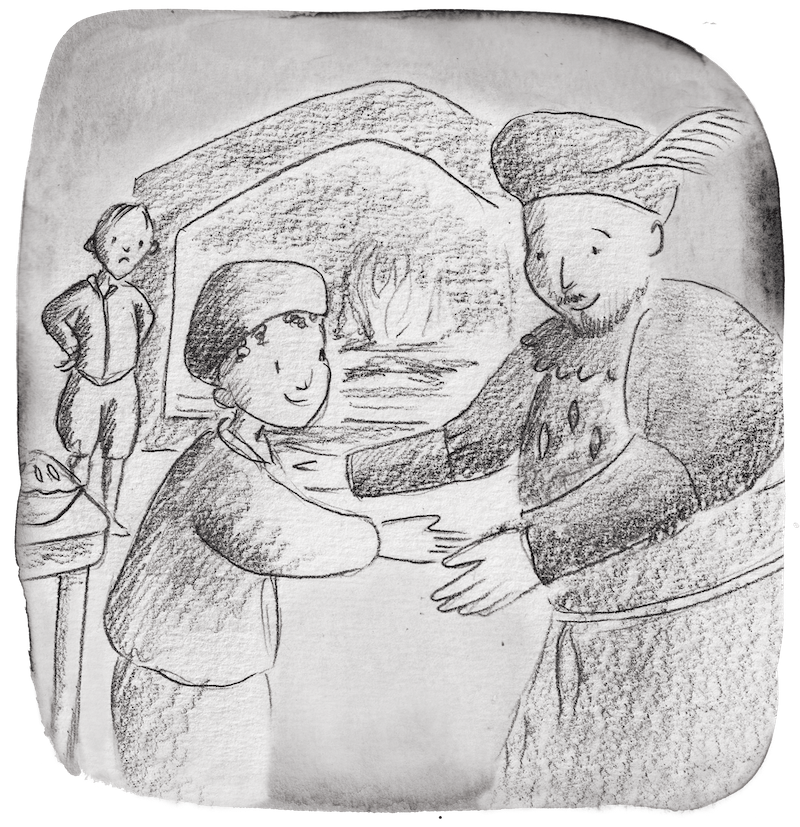
Cats have always been there, watching, sensing, acting at exactly the right moment. Which is precisely what Briar does in my debut novel, The Adventures of Turnbroach Tom and Briar the Hampton Court Cat. Set in the court of Henry VIII in 1535, Briar is a grey Hampton Court cat with extraordinary instincts — and he just might save a king's life.
Perhaps it's not so far-fetched after all.